Do Blinds and Shutters Really Reduce Your Energy Bills?
Do Blinds and Shutters Really Reduce Your Energy Bills?
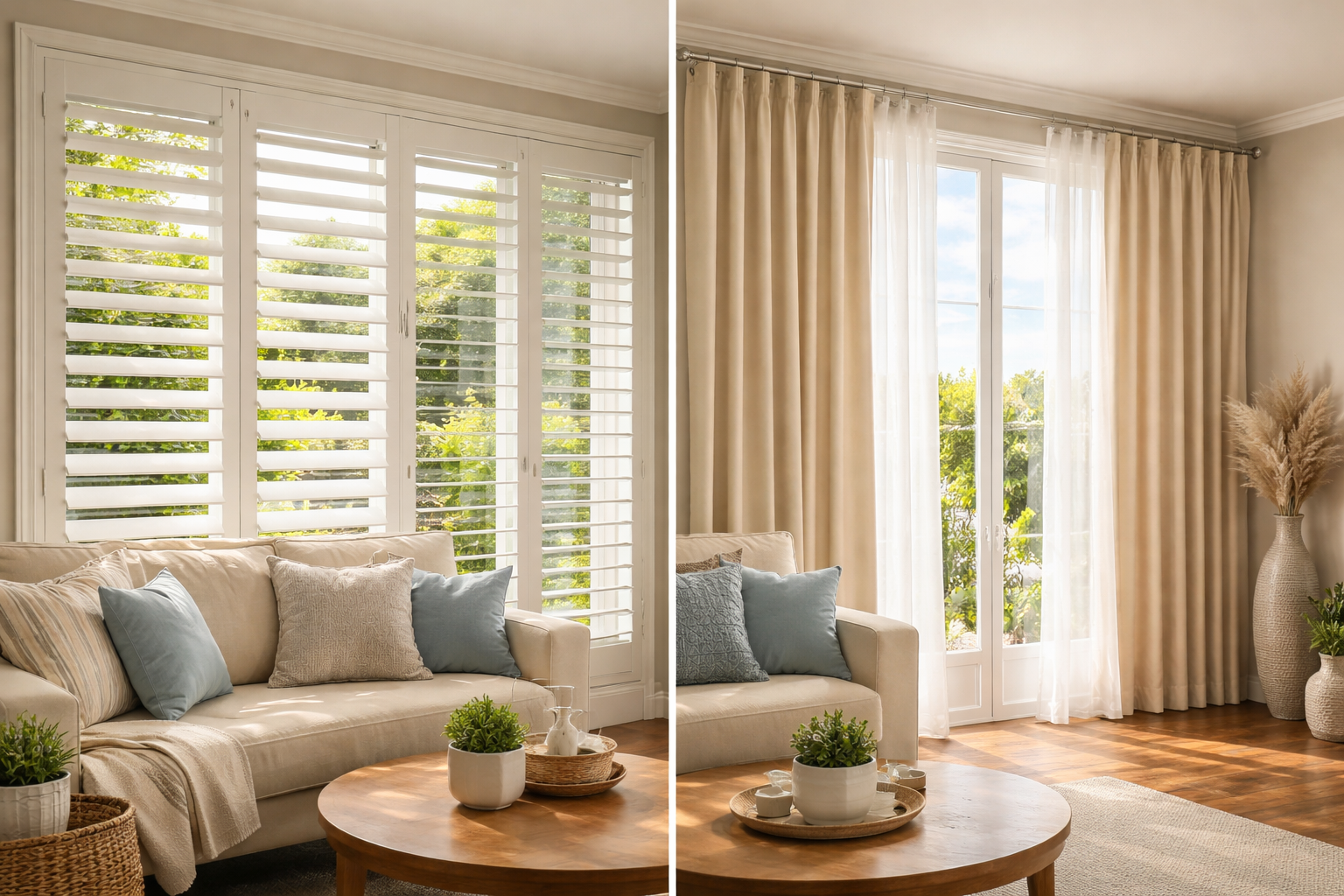
Yes, for most Australian homeowners, plantation shutters are worth it.
They last 15–25 years, require virtually
no maintenance, improve energy efficiency, and add measurable resale value to your home. The upfront cost is higher than blinds or curtains, but the long-term maths almost always stack in their favour. That said, they’re not the right choice for every window or every budget and this guide walks you through exactly when they make sense and when they don’t.
Windows Are Working Against You | Here's How to Fix It
Sydney summers are brutal. By mid-morning on a January day, north and west-facing rooms can feel like an oven, and if your air conditioner is running flat out trying to compensate, you already know what that does to your electricity bill.
But here's what most Sydney homeowners don't realise: up to 87% of a home's unwanted heat gain in summer enters through windows, according to YourHome, the Australian Government's sustainable housing guide. In winter, the same windows are responsible for up to 40% of your home's heat loss.
So when people ask whether blinds and shutters really reduce energy bills, the answer is yes but only if you choose the right product for the right window. Not all window coverings are equal when it comes to thermal performance. A sheer decorative blind does very little. A well-fitted plantation shutter or blockout roller blind makes a measurable, real-world difference to your indoor temperature and what you pay to maintain it.
This guide breaks down exactly how different blinds and shutters perform, the real numbers behind the claims, and which products work hardest for Sydney's specific climate, so you can make a decision based on fact, not marketing language.
Why Windows Are Your Home's Biggest Thermal Weak Point
Before diving into products, it helps to understand the problem they're solving.
Glass is one of the worst insulators in your home. A standard single-glazed window has an insulating value roughly ten times lower than an insulated wall. In summer, sunlight passes straight through glass and converts to heat inside your home a process called solar heat gain. Once that heat is inside, it's trapped, and your air conditioning has to work overtime to remove it.
In winter, the reverse happens. Heat generated inside your home escapes rapidly through unprotected glass, forcing your heater to run longer to maintain a comfortable temperature.
The role of blinds, shutters, and awnings is to interrupt this cycle either by blocking solar heat before it enters, by creating an insulating air layer between the glass and the room, or by doing both simultaneously.
The Real Cost in a Sydney Home
Cooling and heating account for roughly 40% of the average Australian household's energy bill. In Sydney, where summer temperatures regularly exceed 35°C and westerly-facing rooms absorb intense afternoon sun, the cooling burden is particularly high. Every degree you can reduce the indoor peak temperature through passive measures like window coverings is a degree your air conditioner doesn't have to work for.
The financial upside of effective window treatments isn't marginal. It's the kind of saving that compounds over years and, in many cases, pays back the cost of installation within the first few seasons.
How Different Blinds and Shutters Perform
Plantation Shutters | The Strongest All-Round Insulator
Of all internal window coverings, plantation shutters deliver the most consistent thermal performance across both summer and winter. Research cited by the UK's Shutters Up study found that plantation shutters can reduce heat loss through windows by up to 51%, compared to 22% for standard blinds and just 14% for curtains. Some studies show that figure rising as high as 64% when shutters are properly fitted within the window reveal.
The reason comes down to physics. When plantation shutter louvres are closed, they trap a layer of still air between the glass and the room. Still air is an excellent insulator; it slows heat transfer in both directions. Timber shutters add another layer of benefit because solid wood has naturally low thermal conductivity.
In summer, partially opened louvres allow you to direct airflow and diffuse light while still blocking the direct solar angle. In winter, closing them at night creates a meaningful barrier against cold coming through the glass.
For Sydney homeowners with north or west-facing living areas that bear the brunt of summer sun, plantation shutters are one of the highest-return investments you can make in your home's thermal envelope, not just aesthetically, but on your power bill.
Roller Blinds | The Everyday Workhorse for Heat Control
Roller blinds are the most widely used window covering in Australian homes, and when chosen correctly, they deliver genuine energy savings, particularly in summer.
The key variables are fabric type and fit. A loosely fitted fabric roller blind in a light, decorative fabric provides almost no thermal benefit. But a blockout roller blind in a close-fitting cassette housing that eliminates the gaps around the edges can make a significant difference.
Reflective blockout roller blinds are particularly effective for summer heat control. When closed on sun-facing windows, they reflect incoming solar radiation through the glass before it has a chance to convert to heat inside the room. Studies by the Window Shading Association of Australia found that a reflective roller blind reduces heat loss on single-glazed windows by up to 40%, comparable to a pair of heavy curtains.
For maximum performance, look for:
- Blockout or thermal-lined fabric rather than sheer or light-filtering options
- Cassette or channel-tracked systems that fit close to the window frame with minimal side gaps
- Light or white-coloured backings on summer-facing windows to reflect rather than absorb heat
Venetian Blinds | Flexible Control, Moderate Insulation
Venetian blinds offer excellent adjustability; you can tilt the slats to redirect light, block direct sun angles, and allow airflow simultaneously. For light control and glare management, they are highly effective.
For outright insulation, they perform less well than plantation shutters or close-fitting roller blinds. The horizontal slat design creates more air movement around the blind, reducing the still-air buffer that affects insulation performance. That said, highly reflective aluminium Venetian blinds, when fully closed, can reduce solar heat gain by around 45%, according to the US Department of Energy, a figure that translates directly to Australian conditions.
Venetian blinds work well in rooms where you need flexible light and privacy control throughout the day, particularly offices, kitchens, and bathrooms, where their moisture resistance is also an advantage.
Honeycomb (Cellular) Blinds | The Specialist Insulator
If pure thermal insulation is your priority, honeycomb or cellular blinds are engineered specifically for that purpose. Their name describes their structure: the blind fabric is formed into repeating hexagonal air pockets that trap insulating air layers within the blind itself.
A single-cell honeycomb blind outperforms most standard roller blinds for insulation. A double-cell or triple-cell honeycomb blind creates multiple stacked insulating layers, making it one of the most thermally efficient internal window coverings available. Some double-cell options can reduce indoor room temperature by 5–7°C compared to unshaded windows in direct sun.
For Sydney homes with large glass doors or windows facing east or west,
double-cell honeycomb blinds are worth serious consideration, particularly for bedrooms where sleeping temperature affects sleep quality and comfort through the summer months.
External Shading Outperforms Everything Internal
Here's the critical insight that almost no competitor post explains clearly, and it's the most important thing a Sydney homeowner can know about energy-efficient window treatments:
External shading is significantly more effective than internal shading.
Once sunlight passes through glass, it converts from light energy to heat energy inside your room. Internal blinds and shutters then have to deal with heat that is already inside. External shading awnings, outdoor roller blinds, and external shutters intercept the sun before it hits the glass at all.
The numbers tell the story clearly. External shading can reduce heat gain through windows by 70–80%, according to OzSun Shade Systems research. Internal coverings, even high-performance ones, typically achieve 40–55%. The difference is not small.
For west-facing windows in Sydney homes, which absorb the harshest afternoon sun from roughly 1 pm to sunset, outdoor awnings are the single most effective heat management tool available. Studies found that fabric awnings can reduce solar heat gain by up to 65% on south-facing windows and up to 77% on west-facing windows.
This doesn't mean internal blinds and shutters aren't worthwhile; they are, particularly for insulation through winter nights and for rooms where external installation isn't practical. But for homeowners serious about cutting their cooling bills in Sydney summer, combining external awnings on west-facing windows with quality internal blinds on other elevations delivers the best overall result.
The Winter Side of the Equation
Sydney winters are mild but genuine. Overnight temperatures regularly drop to 7–10°C in Western Sydney, and poorly insulated homes lose heat rapidly through single-glazed windows.
Plantation shutters, close-fitted roller blinds, and honeycomb blinds all create insulating air buffers that reduce overnight heat loss. The Window Shading Association of Australia cites research from Glasgow's Caledonian University showing that a reflective roller blind is as effective as a pair of curtains in reducing heat loss on single-glazed windows, with both reducing heat loss by approximately 40%.
The practical habit that maximises winter energy savings is simple: open all north-facing window coverings during the day to let winter sun warm the home passively, then close them at dusk to trap that heat inside overnight. This free passive heating strategy, enabled by having the right window coverings installed, can meaningfully reduce your heating reliance through June, July, and August.
Product-by-Product Energy Performance Summary
| Window Covering | Summer Heat Reduction | Winter Heat Retention | Best For |
|---|---|---|---|
| Plantation Shutters | High (up to 51%) | High (up to 51%) | All rooms, year-round |
| Blockout Roller Blinds (cassette) | Moderate–High (up to 40%) | Moderate (up to 40%) | Bedrooms, living rooms |
| Outdoor Awnings | Very High (65–77%) | N/A (retractable) | West & north-facing windows |
| Honeycomb Blinds | High (5–7°C reduction) | High | Large glass panels, bedrooms |
| Venetian Blinds | Moderate (up to 45% when closed) | Low–Moderate | Kitchens, offices, bathrooms |
| Roller Shutters (external) | Very High (up to 90%) | Very High | Full blackout, security rooms |
What to Prioritise Room by Room
Every Sydney home is different, but these are the most common situations and what performs best:
West-facing living rooms: This is where afternoon heat is most punishing. Outdoor awnings first, then plantation shutters or close-fitted blockout roller blinds inside. The combination gives you control at both layers.
Bedrooms (any orientation): Sleep quality is directly affected by overnight temperature. Blockout roller blinds with thermal lining or plantation shutters with closed louvres at night are the best performers. Honeycomb blinds are also excellent here.
North-facing windows: These receive consistent year-round sun. Plantation shutters with adjustable louvres are ideal — you can manage the solar angle precisely without blocking light entirely.
Kitchens and bathrooms: Moisture resistance matters. PVC Venetian blinds or roller blinds in moisture-resistant fabric handle humidity well while still offering useful summer shading.
Alfresco, balcony, and outdoor entertaining areas: External roller blinds or awnings for weather protection, shade, and privacy. These also reduce heat entering through adjacent glass doors dramatically.
The Smart Approach: Layering Window Treatments
One of the most effective and underused strategies in Sydney homes is layering window treatments. Pairing an outdoor awning with internal plantation shutters on a west-facing window gives you control at both the external and internal level. On summer afternoons, the awning blocks the harshest direct sun; the shutters manage glare and provide privacy inside.
The same principle applies to combining roller blinds with sheer curtains: the roller blind handles solar control and heat management, while the sheer layer maintains a softer, diffused light quality throughout the day.
This layered approach doesn't have to be expensive. Prioritising external shading on the most sun-exposed windows first, then adding quality internal blinds or shutters to the remaining rooms, gives you the best return on investment.
Frequently Asked Questions
Do blockout blinds actually make a room cooler?
Yes, particularly close-fitted cassette roller blinds with reflective or thermal-lined fabric on sun-facing windows. They reflect incoming solar radiation before it converts to heat inside the room, which meaningfully reduces peak temperature on hot days.
Are plantation shutters worth the higher cost for energy savings?
Over time, yes. Their thermal performance is the strongest of any internal window covering, and unlike fabric blinds, they don't degrade or need replacing every 5–10 years. The energy savings, combined with their longevity and property value contribution, typically justify the upfront investment.
Is it better to buy energy-saving blinds or get an outdoor awning?
For purely stopping heat in summer, outdoor awnings on west and north-facing windows outperform any internal covering. For year-round thermal comfort including winter nights, quality internal blinds or shutters are essential. The best outcome combines both.
Do venetian blinds help with insulation?
They offer moderate heat control, particularly when fully closed with reflective slat surfaces. They're not the strongest insulator, but their adjustability makes them practical for rooms where you need flexible light management throughout the day.
How quickly will energy-efficient window coverings pay for themselves?
It depends on your home's orientation, how many windows are covered, and your current cooling and heating costs. For homes in Sydney with significant west-facing exposure, quality external awnings and internal shutters can start reducing bills noticeably within the first summer.
Book a free on-site assessment with SYD Blinds & Shutters. We measure, advise, and quote with no obligation, and offer free temporary blinds while your order is being made.
Ready to work with SYD Blinds & Shutters?
Let's connect! We’re here to help.
Send us a message and we’ll be in touch.
Or give us a call today at 0290-598-262